
The Tree - Person Sheet
The Tree - Person Sheet
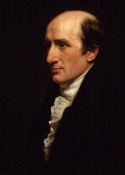
NameCharles Stanhope 

Birth3 Aug 1753, London, England
Death15 Dec 1816, Chevening House, Kent, England
FatherPhilip Stanhope (1714-1786)
MotherGrizel Hamilton (1719-1811)
Misc. Notes
Information from Cynthia Glover’s (nee Coleman) book, “The Allen Family” and first published in 2005. Cynthia’s great-great-great-great-grandfather was this Charles Stanhope b. 1753. (Charles’ granddaughter, Martha Allen b. 1849, married Charles Oliver, youngest son of James and Ruth Oliver).
3rd Earl Stanhope aka Viscount Mahon, Fellow of the Royal Society (FRS), distinguished for his mechanical genius and scientific researches.
Birthplace of Chevening House is now the property of Prince Charles, Prince of Wales.
Charles first wife was Hester Pitt, his first cousin. They had several very happy years together but died in 1780 from complications that set in after childbirth. He next married their first cousin, Louisa Grenville in 1781 but it was a disastrous relationship and they eventually separated in 1806.
Cynthia writes that Charles and Hester had three children:
1. Hester, 1776 - 1839
2. Griselda, 1778 - 1851
3. Lucy, 1780 - 1814
Cynthia writes that Charles and Louisa had four children:
1. Philip Henry Stanhope, 4th Earl, 1781 - 1855
2. Banks, 1784 - 1784
3. Major Charles Banks, 1785 - 1809, killed in action
4. Lieut. Col. James Hamilton, 1788 - 1825, committed suicide
In 1810, Charles had a son, William Allin (Allen), to Mary Allin (of Sutcombe Town in Devon), a maid in his employ at Chevening House on his estate near Sevenoaks, Kent. It was this William that later emigrated to New Zealand and whose daughter, Martha Allen, married Charles Oliver. Charles Stanhope would have been 56 and Mary 23 years of age at the time of William’s birth. A full account of Charles Stanhope’s life is given in Cynthia's book, “The Allen Family” and first published in 2005.
Charles Stanhope and Mary Allin died within two weeks of each other in December 1815. Charles peacefully at home, possibly from a heart attack, and Mary possibly from a typhus related epidemic.
Quoting Wikipedia, "The son of the 2nd Earl Stanhope, he was educated at Eton and the University of Geneva. While in Geneva, he devoted himself to the study of mathematics under Georges-Louis Le Sage, and acquired from Switzerland an intense love of liberty".
"In politics he was a democrat. As Lord Mahon he contested the Westminster without success in 1774, when only just of age; but from the general election of 1780 until his accession to the peerage on 7 March 1786 he represented through the influence of Lord Shelburne the Buckinghamshire borough of High Wycombe. During the sessions of 1783 and 1784 he supported William Pitt the Younger, whose sister, Lady Hester Pitt, he married on 19 December 1774".
"Stanhope was an accomplished scientist. This started at the University of Geneva where he studied mathematics under Georges-Louis Le Sage. Electricity was another of the subjects which he studied, and the volume of Principles of Electricity which he issued in 1779 contained the rudiments of his theory on the "return stroke" resulting from the contact with the earth of the electric current of lightning, which were afterwards amplified in a contribution to the Philosophical Transactions for 1787. He was elected a fellow of the Royal Society so early as November 1772, and devoted a large part of his income to experiments in science and philosophy. He invented a method of securing buildings from fire (which, however, proved impracticable), the printing press and the lens which bear his name and a monochord for tuning musical instruments, suggested improvements in canal locks, made experiments in steam navigation in 1795–1797 and contrived two calculating machines".
"When he acquired extensive property in Devon, Stanhope projected a canal through that county from the Bristol to the English Channel and took the levels himself".
3rd Earl Stanhope aka Viscount Mahon, Fellow of the Royal Society (FRS), distinguished for his mechanical genius and scientific researches.
Birthplace of Chevening House is now the property of Prince Charles, Prince of Wales.
Charles first wife was Hester Pitt, his first cousin. They had several very happy years together but died in 1780 from complications that set in after childbirth. He next married their first cousin, Louisa Grenville in 1781 but it was a disastrous relationship and they eventually separated in 1806.
Cynthia writes that Charles and Hester had three children:
1. Hester, 1776 - 1839
2. Griselda, 1778 - 1851
3. Lucy, 1780 - 1814
Cynthia writes that Charles and Louisa had four children:
1. Philip Henry Stanhope, 4th Earl, 1781 - 1855
2. Banks, 1784 - 1784
3. Major Charles Banks, 1785 - 1809, killed in action
4. Lieut. Col. James Hamilton, 1788 - 1825, committed suicide
In 1810, Charles had a son, William Allin (Allen), to Mary Allin (of Sutcombe Town in Devon), a maid in his employ at Chevening House on his estate near Sevenoaks, Kent. It was this William that later emigrated to New Zealand and whose daughter, Martha Allen, married Charles Oliver. Charles Stanhope would have been 56 and Mary 23 years of age at the time of William’s birth. A full account of Charles Stanhope’s life is given in Cynthia's book, “The Allen Family” and first published in 2005.
Charles Stanhope and Mary Allin died within two weeks of each other in December 1815. Charles peacefully at home, possibly from a heart attack, and Mary possibly from a typhus related epidemic.
Quoting Wikipedia, "The son of the 2nd Earl Stanhope, he was educated at Eton and the University of Geneva. While in Geneva, he devoted himself to the study of mathematics under Georges-Louis Le Sage, and acquired from Switzerland an intense love of liberty".
"In politics he was a democrat. As Lord Mahon he contested the Westminster without success in 1774, when only just of age; but from the general election of 1780 until his accession to the peerage on 7 March 1786 he represented through the influence of Lord Shelburne the Buckinghamshire borough of High Wycombe. During the sessions of 1783 and 1784 he supported William Pitt the Younger, whose sister, Lady Hester Pitt, he married on 19 December 1774".
"Stanhope was an accomplished scientist. This started at the University of Geneva where he studied mathematics under Georges-Louis Le Sage. Electricity was another of the subjects which he studied, and the volume of Principles of Electricity which he issued in 1779 contained the rudiments of his theory on the "return stroke" resulting from the contact with the earth of the electric current of lightning, which were afterwards amplified in a contribution to the Philosophical Transactions for 1787. He was elected a fellow of the Royal Society so early as November 1772, and devoted a large part of his income to experiments in science and philosophy. He invented a method of securing buildings from fire (which, however, proved impracticable), the printing press and the lens which bear his name and a monochord for tuning musical instruments, suggested improvements in canal locks, made experiments in steam navigation in 1795–1797 and contrived two calculating machines".
"When he acquired extensive property in Devon, Stanhope projected a canal through that county from the Bristol to the English Channel and took the levels himself".
Spouses
Marriage19 Dec 1774
Marriage1781
Birthbef 10 Dec 1786, Stoke Damerel, Devon, England
Death28 Dec 1816, Holsworthy, Devon, England
Burial1 Jan 1817, Holsworthy Parish churchyard, Devon, England
FatherWilliam Allen
MotherElizabeth Dennis (<1746-)
Unmarried
ChildrenWilliam (<1810-1893)