
The Tree - Person Sheet
The Tree - Person Sheet
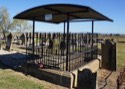
NameBenjamin Singleton 

Birth7 Aug 1788, England
Death3 May 1853, Singleton, New South Wales, Australia
Burial4 May 1853, Singleton, New South Wales, Australia
FatherWilliam Singleton (ca1752-1835)
MotherHannah Parkinson (ca1758-1813)
Misc. Notes
Name, date and place of birth, year and place of marriage, date and place of death and burial, from Australian Royalty website, found in November 2023 and added here in December 2023:
https://australianroyalty.net.au/tree/purnellmccor...7/Benjamin-Singleton
Name: Benjamin Singleton
Birth: 7 August 1788, England
Immigration: Arrived 14 February 1792 (aged 3 years), Sydney Cove Sydney, New South Wales, Australia [Fourth Fleet]
Immigration Text: came free, per the ship Pitt
Marriage: Mary Lane 1811 (aged 22 years), St Matthew's Church of England, Windsor, Hawkesbury, New South Wales, Australia
Occupation: Explorer between 1817 and 1820 New South Wales, Australia
Note: In 1817 and 1818 he was involved with others in exploring for a route to the Hunter Valley. Then during 1820 he was a member of the expedition to the Hunter Valley led by John HOWE the Chief Constable of Windsor which was the first recorded European trip into the Singleton, NSW area.
Property: 1821 Singleton, Hunter, New South Wales, Australia
Property Text: In 1821 he received a grant of 97.2 hectares of land near the ford crossing the Hunter River in recognition of his contribution to the exploration party and had settled there with his family by 1823 when he was appointed District Constable. His residence became the core of the town of Singleton and over the years he contributed much to the economy. He had apparently erected a mill at the future Singleton townsite or nearby in 1829 and operated what may be the same mill there from 1830 to 1835. Benjamin subdivided off part of this property as the town of Singleton in 1836. Other ventures included erecting an inn, a brewery and a courthouse.
Census 1822, Wilberforce, Hawkesbury, New South Wales, Australia
Singleton, Benjamin, aged 33 years, came free, Pitt, landholder, Windsor
Singleton, William, born in the colony, Windsor
Singleton, Elizabeth, 20, born in the colony, single, Windsor
Singleton, James, came free, Eolus, landholder, Windsor
Singleton, Mary, 20, born in the colony, wife of B. Singleton, Windsor
6 un-named children of Mary Singleton, Windsor
Census about 1825 , Wilberforce, Hawkesbury, New South Wales, Australia
Singleton, Benjamin, aged 36 years, free by servitude, Pitt, 1792, 7 years, landholder, Wilberforce
Death: 3 May 1853 (aged 64 years), Singleton, Hunter, New South Wales, Australia
Death Text: The depression of the 1840's caused his insolvency and he died on the 2nd or 3rd of May 1853 at Singleton.
Obituary Maitland Mercury Wed 4 May 1853 p. 3:
At Singleton, on the 3rd instant, Mr. Benjamin Singleton, aged 65, leaving a widow who had been a faithful companion 42 years, eight children, and thirty-one grand children, to lament his loss. He was one of the first discoverers of Patrick's Plains-a man of indomitable energy and perseverance, of frugal and temperate habits; and if he had a fault, it was that he was a greater friend to every body than himself.
Burial: 4 May 1853 (1 day after death), Singleton, Hunter, New South Wales, Australia
Cemetery: Whittingham Cemetery, Singleton
Family with Mary Lane:
Elizabeth Singleton 1812–1894
Hannah Singleton 1813–1853
William Singleton 1815–1888
Benjamin Singleton 1817–1889
Mary Singleton 1818–1894
Sarah Singleton …–1852
John Singleton 1823–…
Amelia Singleton 1824–1891
Emma Singleton 1825–1898
Louisa Singleton 1827–1908
George Australia Singleton 1829–1899
- - - -
The town of Singleton
The town of Singleton was named after this Benjamin Singleton.
In each of the years 1817, 1818, and 1820, Benjamin took part in three expeditions to discover a route from Windsor on the Hawkesbury River (40 miles or 65km north west of Sydney) through to the Hunter Valley in the north. The last expedition was successful, finding a route which became known as the Bulga Road. On 15 March 1820 the group reached the Hunter, and followed its course upstream and west to an area to be named St. Patrick’s Plain. The area was excellent for cultivation and equally so for grazing.
For Benjamin's part in this expedition he was granted 200 acres on 31 March 1821 at St. Patrick’s Plain as a reward for his share in this successful expedition. Part of his land became the site of the new town and in 1822 the town was renamed after Benjamin Singleton. Singleton today is located 130 miles (210 km) north of Sydney by road.
Further information may be found at:
https://www.britannica.com/place/Singleton-New-South-Wales
https://en.wikipedia.org/wiki/Benjamin_Singleton_(Australian_settler)
https://www.freesettlerorfelon.com/benjamin_singleton.htm
- - - -
Newspaper article from the Singleton Argus of Friday 7 June 1935, found in March 2024 on the National Library of Australia’s Trove website:
SINGLETON OF OTHER DAYS
ITS PEOPLE AND AFFAIRS.
(By SIR SOLOMON).
BENJAMIN SINGLETON.
The question as to what constitutes a pioneer has repeatedly cropped, up, and some time, ago the Historical Society decided that only those that had arrived in the colony prior to 1820 could lay claim to the coveted distinction. That, of course, applied only to the County of Cumberland.
One person made certain to comply with that part of the qualification by arriving in the colony in 1792, fourteen years after it was founded, and that person was Benjamin Singleton. He, was only four years of age at the time, he having been born in 1788. He was accompanied by his father, William Singleton, who was appointed a private in the historic "Rum" corps. Both hailed from Yarmouth, where the tasty bloaters are to be found. After a time Singleton, Senior, obtained a land grant of 90 acres at Wilberforce, on the Hawkesbury, and then launched out as a farmer. In between times he took a prominent part in public affairs, and he and a Mr Henry Baldwin were appointed joint secretaries to the Emancipated Colonists' League at Wilberforce.
As young Ben reached man's estate he proved himself one of the most enterprising and progressive young men of his time. He had a penchant for converting wheat into flour, and had erected at various centres on the Hawkesbury all the gristing mills required, and these were all named "Singleton's Mill". The one he built at Wiseman 's Ferry is still in a good state of preservation………..
[NOTE: To see full article, see PDF on Benjamin’s Media Page].
- - - -
https://australianroyalty.net.au/tree/purnellmccor...7/Benjamin-Singleton
Name: Benjamin Singleton
Birth: 7 August 1788, England
Immigration: Arrived 14 February 1792 (aged 3 years), Sydney Cove Sydney, New South Wales, Australia [Fourth Fleet]
Immigration Text: came free, per the ship Pitt
Marriage: Mary Lane 1811 (aged 22 years), St Matthew's Church of England, Windsor, Hawkesbury, New South Wales, Australia
Occupation: Explorer between 1817 and 1820 New South Wales, Australia
Note: In 1817 and 1818 he was involved with others in exploring for a route to the Hunter Valley. Then during 1820 he was a member of the expedition to the Hunter Valley led by John HOWE the Chief Constable of Windsor which was the first recorded European trip into the Singleton, NSW area.
Property: 1821 Singleton, Hunter, New South Wales, Australia
Property Text: In 1821 he received a grant of 97.2 hectares of land near the ford crossing the Hunter River in recognition of his contribution to the exploration party and had settled there with his family by 1823 when he was appointed District Constable. His residence became the core of the town of Singleton and over the years he contributed much to the economy. He had apparently erected a mill at the future Singleton townsite or nearby in 1829 and operated what may be the same mill there from 1830 to 1835. Benjamin subdivided off part of this property as the town of Singleton in 1836. Other ventures included erecting an inn, a brewery and a courthouse.
Census 1822, Wilberforce, Hawkesbury, New South Wales, Australia
Singleton, Benjamin, aged 33 years, came free, Pitt, landholder, Windsor
Singleton, William, born in the colony, Windsor
Singleton, Elizabeth, 20, born in the colony, single, Windsor
Singleton, James, came free, Eolus, landholder, Windsor
Singleton, Mary, 20, born in the colony, wife of B. Singleton, Windsor
6 un-named children of Mary Singleton, Windsor
Census about 1825 , Wilberforce, Hawkesbury, New South Wales, Australia
Singleton, Benjamin, aged 36 years, free by servitude, Pitt, 1792, 7 years, landholder, Wilberforce
Death: 3 May 1853 (aged 64 years), Singleton, Hunter, New South Wales, Australia
Death Text: The depression of the 1840's caused his insolvency and he died on the 2nd or 3rd of May 1853 at Singleton.
Obituary Maitland Mercury Wed 4 May 1853 p. 3:
At Singleton, on the 3rd instant, Mr. Benjamin Singleton, aged 65, leaving a widow who had been a faithful companion 42 years, eight children, and thirty-one grand children, to lament his loss. He was one of the first discoverers of Patrick's Plains-a man of indomitable energy and perseverance, of frugal and temperate habits; and if he had a fault, it was that he was a greater friend to every body than himself.
Burial: 4 May 1853 (1 day after death), Singleton, Hunter, New South Wales, Australia
Cemetery: Whittingham Cemetery, Singleton
Family with Mary Lane:
Elizabeth Singleton 1812–1894
Hannah Singleton 1813–1853
William Singleton 1815–1888
Benjamin Singleton 1817–1889
Mary Singleton 1818–1894
Sarah Singleton …–1852
John Singleton 1823–…
Amelia Singleton 1824–1891
Emma Singleton 1825–1898
Louisa Singleton 1827–1908
George Australia Singleton 1829–1899
- - - -
The town of Singleton
The town of Singleton was named after this Benjamin Singleton.
In each of the years 1817, 1818, and 1820, Benjamin took part in three expeditions to discover a route from Windsor on the Hawkesbury River (40 miles or 65km north west of Sydney) through to the Hunter Valley in the north. The last expedition was successful, finding a route which became known as the Bulga Road. On 15 March 1820 the group reached the Hunter, and followed its course upstream and west to an area to be named St. Patrick’s Plain. The area was excellent for cultivation and equally so for grazing.
For Benjamin's part in this expedition he was granted 200 acres on 31 March 1821 at St. Patrick’s Plain as a reward for his share in this successful expedition. Part of his land became the site of the new town and in 1822 the town was renamed after Benjamin Singleton. Singleton today is located 130 miles (210 km) north of Sydney by road.
Further information may be found at:
https://www.britannica.com/place/Singleton-New-South-Wales
https://en.wikipedia.org/wiki/Benjamin_Singleton_(Australian_settler)
https://www.freesettlerorfelon.com/benjamin_singleton.htm
- - - -
Newspaper article from the Singleton Argus of Friday 7 June 1935, found in March 2024 on the National Library of Australia’s Trove website:
SINGLETON OF OTHER DAYS
ITS PEOPLE AND AFFAIRS.
(By SIR SOLOMON).
BENJAMIN SINGLETON.
The question as to what constitutes a pioneer has repeatedly cropped, up, and some time, ago the Historical Society decided that only those that had arrived in the colony prior to 1820 could lay claim to the coveted distinction. That, of course, applied only to the County of Cumberland.
One person made certain to comply with that part of the qualification by arriving in the colony in 1792, fourteen years after it was founded, and that person was Benjamin Singleton. He, was only four years of age at the time, he having been born in 1788. He was accompanied by his father, William Singleton, who was appointed a private in the historic "Rum" corps. Both hailed from Yarmouth, where the tasty bloaters are to be found. After a time Singleton, Senior, obtained a land grant of 90 acres at Wilberforce, on the Hawkesbury, and then launched out as a farmer. In between times he took a prominent part in public affairs, and he and a Mr Henry Baldwin were appointed joint secretaries to the Emancipated Colonists' League at Wilberforce.
As young Ben reached man's estate he proved himself one of the most enterprising and progressive young men of his time. He had a penchant for converting wheat into flour, and had erected at various centres on the Hawkesbury all the gristing mills required, and these were all named "Singleton's Mill". The one he built at Wiseman 's Ferry is still in a good state of preservation………..
[NOTE: To see full article, see PDF on Benjamin’s Media Page].
- - - -
Spouses
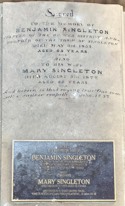
Birth28 Dec 1796, Bay of Biscay, France
Death5 Aug 1877, West Maitland, New South Wales, Australia
Burial6 Aug 1877, Singleton, New South Wales, Australia
Marriage1811, Windsor, Hawkesbury, New South Wales, Australia
ChildrenLouisa (1827-1908)